Ashford Saturday Market: A Beginner's Guide to Shopping for Fresh Produce and Local Crafts
Ashford's Saturday market is one of the few places in town where you can sort the week's vegetables and pick up a birthday present from the person who made it, all in one lap and without a self-checkout screen. If you have never been, or you have walked past the stalls without stopping, a first visit can feel slightly awkward. Who do you talk to? When do you pay? What happens if you only want one onion? None of it is complicated, but a little preparation makes the morning much better.
What you'll actually find
This is a mixed market rather than a single-purpose farmers' market, which is part of its charm. Expect fruit and veg traders, a bakery or two, cheese and deli stalls, someone selling plants or cut flowers, a few hot food vans, and a row of craft sellers working in jewellery, textiles, wood, candles or prints. The line-up shifts from week to week, particularly in winter, so it is worth checking the council's market page or a local listings post if you are making a special trip for one particular trader.
Produce stalls
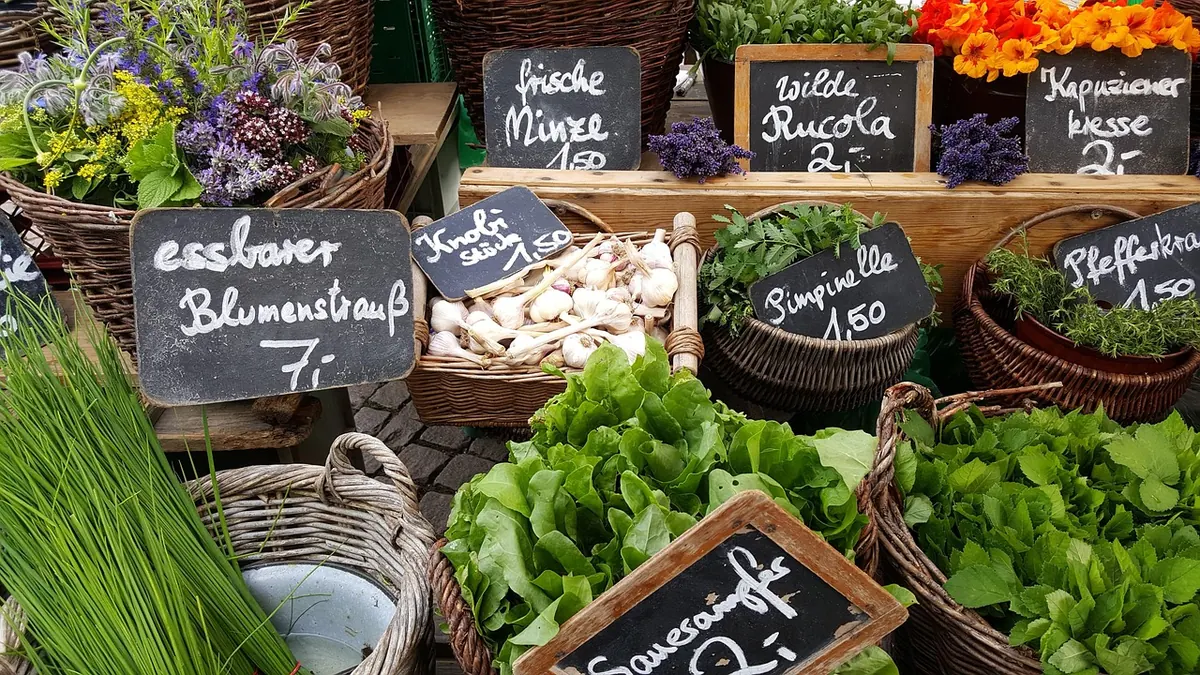
Most fruit and veg here is sold loose or by the bowl, which means you can buy exactly what you need rather than a plastic-wrapped portion for four. You will usually find the everyday staples alongside a few things that are harder to get in a supermarket — interesting salad leaves, unusual squash, decent tomatoes in season.
Craft and gift stalls
The craft side is smaller but worth a slow walk. You are often buying directly from the maker, which means you can ask how something was made, whether it can be repaired, and whether they can do it in a different size or colour. That conversation is the whole point.
When to arrive
The honest answer is earlier than you think, but not at the very start. Markets generally run through the morning into the early afternoon, and times can change with the season, so check before you set out.
First hour or two. Best choice of produce, shortest queues, and traders have time to talk. The trade-off is that a few stalls may still be setting up.
Late morning. Everything is open and the atmosphere is at its best, but it is also the busiest stretch. Popular items start selling out.
Final hour. You may find reductions, and the mood is relaxed, but the good stuff has gone. Fine for browsing, poor for a specific shopping list.
Weather matters more than most people expect. Rain keeps the crowds away, so a waterproof and a willingness to get damp can work in your favour. On a hot day, go early — produce sits in the sun, and you will be carrying bags in the heat. Parking in the town centre fills quickly on Saturdays, so arriving before the main rush saves you circling; if you live locally, walking or the bus removes the problem entirely.
How to shop the produce stalls
Market shopping rewards a bit of patience. Walk the whole line before you buy anything, even if something catches your eye immediately — the stall at the far end may have the same thing cheaper, fresher, or in a size that suits you better.
- Do a full lap first. Two minutes of looking saves ten minutes of regret.
- Ask what is good this week. Traders will tell you honestly what is at its peak and what is nearly finished.
- Buy for what you will actually cook. A bargain crate of something you have no plan for is not a bargain.
- Bring your own bags. A couple of sturdy totes and a small cloth for delicate items.
- Ask about ripeness and shelf life. "How long will this keep?" is a completely normal question.
- Handle gently. Prodding and squeezing damages produce that the next person then has to buy.
- Split bulk buys with someone. A large bunch of herbs or a big bag of onions often makes sense shared between two households.
If you have a food allergy or a specific dietary need, speak directly to the stallholder, especially at hot food stalls where equipment and surfaces are shared. If you are not confident in the answer, do not take the risk.
Buying crafts without regrets
Handmade goods sit at a different price point from high street equivalents, and that is reasonable — you are paying for materials, time and skill. The trick is to buy something you will still like in a year.
Ask about the materials and how the piece should be cared for. Check the finish on the parts that take the wear: seams, clasps, hinges, the base of a bowl. If it is a gift, ask whether it comes boxed or wrapped, and whether the maker can include a card. If you want a variation on what is on the table, ask — many makers take commissions, but expect to wait and to leave a deposit. Do not haggle hard on handmade work; asking politely whether there is a small discount for buying two items is fine, pushing for half price is not. Before you walk away, note the maker's name or take a card. Half the frustration of markets is finding something perfect and never tracking down the person who made it.
A first-visit plan that works
- Arrive with cash, your own bags, and a rough idea of what you need for the week.
- Do one full lap without buying anything.
- Choose two or three stalls you want to return to.
- Buy fresh and chilled items first, then take them straight to the car or into a cool bag.
- Get hot food and eat it while you are there — it is part of the morning.
- Buy crafts and gifts last, since they are light and do not spoil.
In warm weather, a cool bag in the boot is worth the small effort if you are buying cheese, meat or anything that needs to stay cold on the way home.
Making it part of your week
The best way to get value from a market is repetition. Go at roughly the same time each week, learn two or three traders' names, and let them get to know what you buy. That relationship is what turns a Saturday stroll into a genuinely useful shopping habit — better produce, useful advice, and a morning that feels like yours rather than a chore. Start with the lap, buy what looks good, and build from there.
Photo: brigwa / Pixabay